
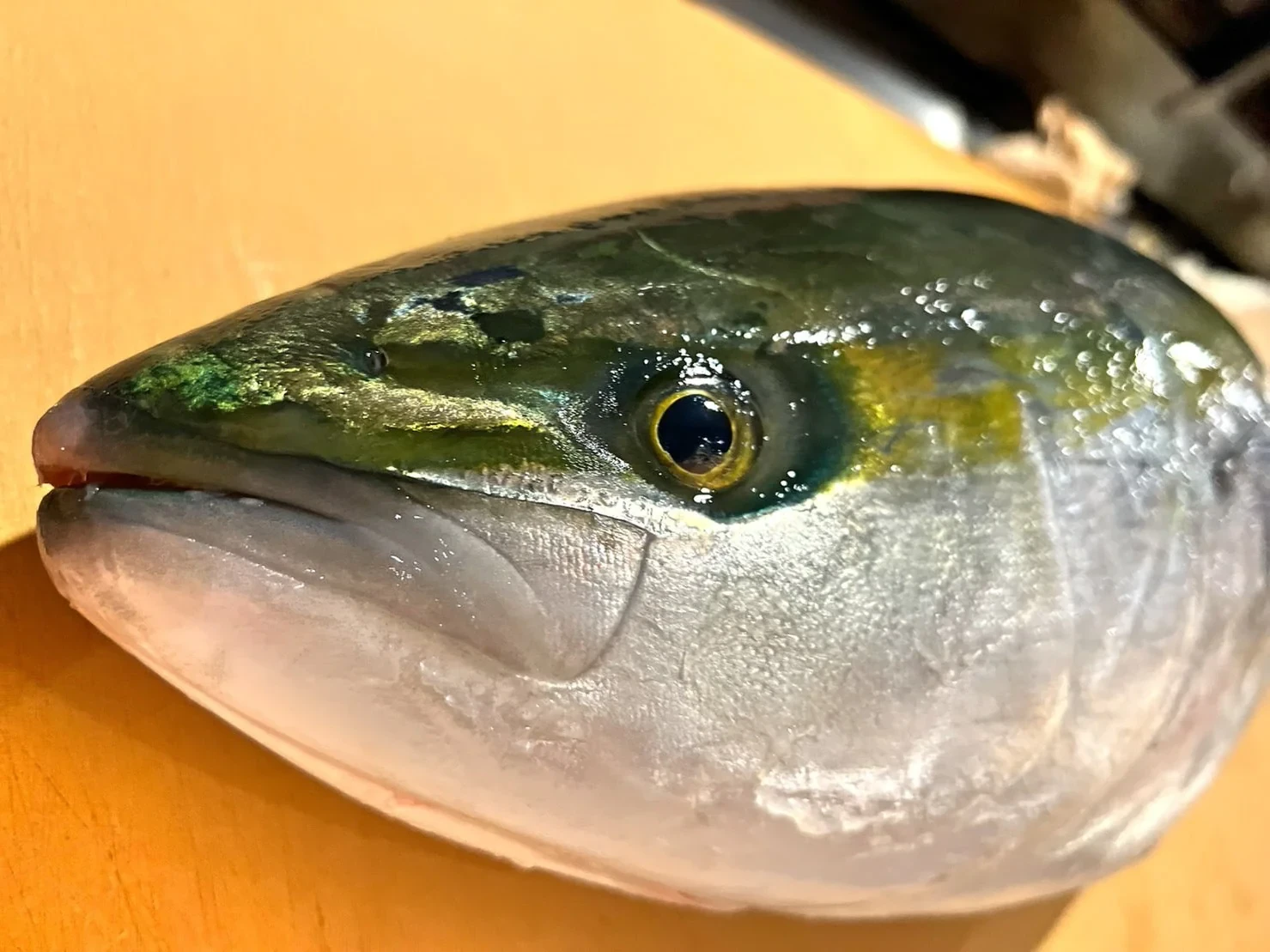
HAMACHI TENNEN - FRESH WILD YELLOWTAIL - Seriola quinqueradiata
Description
ハマチ 天然 HAMACHI - FRESH WILD YELLOWTAIL - Seriola quinqueradiata
AKA. Japanese amberjack or yellowtail
Texture/Flavor Profile
Wild Hamachi presents a firmer texture and leaner profile than its farmed counterpart. The muscle structure develops through natural swimming, producing meat with clean lines and subtle resistance. Flavor is elegant yet powerful—rich umami balanced by ocean brightness. The fat is concentrated and aromatic, yielding a crisp finish that reflects the cold, open waters where it roams.
Availability/Seasonality
Wild Hamachi, known as Tennen Hamachi, is available primarily in the winter months, when the fish accumulate natural fat for warmth. The season peaks from December through February, especially along Japan’s southern and western coasts. Limited availability and unpredictable catch volumes make it a true seasonal delicacy valued for its authenticity and nuanced flavor variation each year.
About
Hamachi is the youthful stage of Japanese yellowtail, Seriola quinqueradiata, a migratory fish revered across Japan for centuries. Wild-caught specimens live freely in deep coastal currents, feeding on sardines and squid, which shape their distinctive taste. In contrast to farm-raised Hamachi, Tennen fish exhibit greater athleticism, resulting in refined flesh that chefs prize for traditional sushi and sashimi. Its rarity and depth of flavor evoke the craftsmanship of winter cuisine.
Preparation
Wild Hamachi excels in raw preparations that highlight its purity. Sliced as sashimi, it reveals marbled translucence and a lively texture. Light curing with salt or yuzu enhances its minerality, while grilling over charcoal intensifies umami without masking delicacy. Pair with ponzu, grated daikon, or seasonal citrus to accent the fish’s natural sweetness and sea-borne complexity.
Nutritional Value
Naturally rich in Omega-3 fatty acids, wild yellowtail supports cardiovascular and brain health while offering a leaner fat ratio than farmed types. It’s a robust source of protein, vitamin D, and selenium. The clean, wild diet contributes trace minerals and balanced lipids, making Tennen Hamachi both indulgent and wholesome for modern, health-conscious cuisine.
Selection and Storage
Choose fillets with firm, lustrous flesh and a mild ocean aroma. The skin should display natural sheen without dullness. Store under chilled conditions between 0–2°C and consume within 48 hours of receipt for peak character. When frozen, rapid blast-freezing preserves its texture and delicate oils, allowing near-fresh quality when properly thawed.
Summary
ハマチ 天然 (Tennen Hamachi) embodies the grace of Japan’s winter seas—lean, pristine, and deeply expressive. Its natural life yields firmer texture and complex flavor that reward simplicity in preparation. Sought after by chefs for its rarity and balance, wild yellowtail stands as a seasonal jewel of traditional Japanese cuisine.
AKA. Japanese amberjack or yellowtail
Texture/Flavor Profile
Wild Hamachi presents a firmer texture and leaner profile than its farmed counterpart. The muscle structure develops through natural swimming, producing meat with clean lines and subtle resistance. Flavor is elegant yet powerful—rich umami balanced by ocean brightness. The fat is concentrated and aromatic, yielding a crisp finish that reflects the cold, open waters where it roams.
Availability/Seasonality
Wild Hamachi, known as Tennen Hamachi, is available primarily in the winter months, when the fish accumulate natural fat for warmth. The season peaks from December through February, especially along Japan’s southern and western coasts. Limited availability and unpredictable catch volumes make it a true seasonal delicacy valued for its authenticity and nuanced flavor variation each year.
About
Hamachi is the youthful stage of Japanese yellowtail, Seriola quinqueradiata, a migratory fish revered across Japan for centuries. Wild-caught specimens live freely in deep coastal currents, feeding on sardines and squid, which shape their distinctive taste. In contrast to farm-raised Hamachi, Tennen fish exhibit greater athleticism, resulting in refined flesh that chefs prize for traditional sushi and sashimi. Its rarity and depth of flavor evoke the craftsmanship of winter cuisine.
Preparation
Wild Hamachi excels in raw preparations that highlight its purity. Sliced as sashimi, it reveals marbled translucence and a lively texture. Light curing with salt or yuzu enhances its minerality, while grilling over charcoal intensifies umami without masking delicacy. Pair with ponzu, grated daikon, or seasonal citrus to accent the fish’s natural sweetness and sea-borne complexity.
Nutritional Value
Naturally rich in Omega-3 fatty acids, wild yellowtail supports cardiovascular and brain health while offering a leaner fat ratio than farmed types. It’s a robust source of protein, vitamin D, and selenium. The clean, wild diet contributes trace minerals and balanced lipids, making Tennen Hamachi both indulgent and wholesome for modern, health-conscious cuisine.
Selection and Storage
Choose fillets with firm, lustrous flesh and a mild ocean aroma. The skin should display natural sheen without dullness. Store under chilled conditions between 0–2°C and consume within 48 hours of receipt for peak character. When frozen, rapid blast-freezing preserves its texture and delicate oils, allowing near-fresh quality when properly thawed.
Summary
ハマチ 天然 (Tennen Hamachi) embodies the grace of Japan’s winter seas—lean, pristine, and deeply expressive. Its natural life yields firmer texture and complex flavor that reward simplicity in preparation. Sought after by chefs for its rarity and balance, wild yellowtail stands as a seasonal jewel of traditional Japanese cuisine.